WILDLIFE &
INFRASTRUCTURE
Infrastructure that works for both people and wildlife
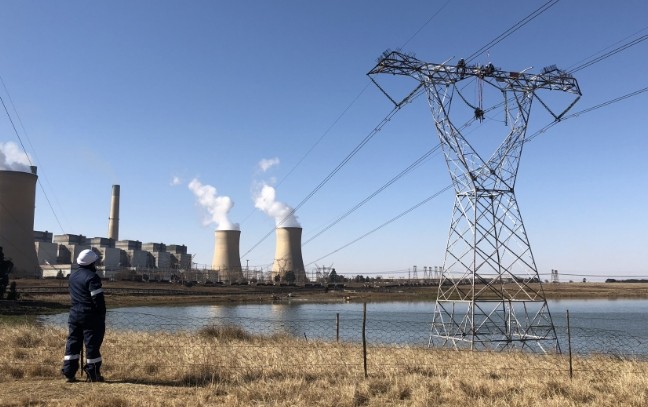
Africa’s infrastructure needs to expand rapidly to ensure it can support both economic growth and connect communities. Our work with governments, utilities, developers, and industry includes proper planning and developing retrofitting solutions to reduce the impacts of roads, power lines, renewable energy, and other infrastructure on wildlife.
WILDLIFE AND INFRASTRUCTURE
WHY WILDLIFE &
INFRASTRUCTURE
MATTERS
Infrastructure is essential for Africa’s
future
Roads connect communities, power lines deliver electricity, and renewable energy supports the transition to a low-carbon economy. But when infrastructure is poorly planned or managed, it can become one of the greatest threats to wildlife.
Power lines can be a collision risk and can electrocute birds. Roads fragment habitats and kill animals in their thousands every year. Wind turbines can affect birds, bats, and sensitive habitats. These negative impacts on wildlife, including isolating wildlife populations and disrupting natural movements across landscapes are revealed when infrastructure is poorly planned and/or does not consider wildlife.
These impacts also affect people. Negative wildlife interactions with infrastructure damages equipment, interrupts essential services, increases maintenance costs, and reduces the reliability of critical infrastructure. Focus needs to be two-pronged. Firstly, enabling infrastructure development that benefits both biodiversity and the people who depend on these systems every day. Secondly, reconfiguring Africa’s existing infrastructure to ensure continued service, keeping its longevity and ensuring it becomes wildlife-friendly.
WILDLIFE AND INFRASTRUCTURE
THE THREATS WE
ADDRESS
We work to reduce the impacts of
infrastructure on wildlife by
addressing the following threats:
Bird collisions
with power lines.
Bird electrocutions
on distribution networks and substations.
Wildlife mortality
on roads.
Wind energy
impacts on birds and bats.
Habitat
fragmentation
caused by linear infrastructure.
Infrastructure
damage
caused by large mammals.
Poorly planned
infrastructure
in environmentally sensitive areas.
WILDLIFE AND INFRASTRUCTURE
HOW WE CREATE
CHANGE
Wildlife and infrastructure can coexist when biodiversity is considered from planning and design through to construction and operation. We combine science, innovation and collaboration to reduce wildlife impacts, while supporting sustainable development across Africa.
Guiding better decisions through science
Good infrastructure begins with good evidence. We conduct long-term research and monitoring to understand how wildlife interacts with roads, power lines, renewable energy developments, and other infrastructure. This evidence helps identify risks, prioritise mitigation, measure conservation outcomes, and inform infrastructure planning across Africa.

Designing practical solutions
We help develop and implement innovative mitigation measures that make infrastructure safe for wildlife without compromising operational performance. From wildlife-friendly engineering and species-specific mitigation to new technologies that improve efficiency and reduce costs, we work with infrastructure owners to solve conservation challenges in practical and cost-effective ways.

Influencing planning and policy
The greatest conservation gains come from avoiding impacts before infrastructure is built. We work with governments, developers, utilities, and environmental authorities to integrate biodiversity into environmental impact assessments, infrastructure planning, industry standards, and policy, helping ensure wildlife is considered from the earliest stages of development. Another aspect of planning is contributing wildlife knowledge to wildlife friendly designs.

Building partnerships for lasting impact
Reducing wildlife impacts requires collaboration, with each partner bringing unique skills and new knowledge to influence policies, standards and structures. We work with utilities, road agencies, renewable energy developers, engineers, researchers, government authorities, conservation organisations, and local communities to implement practical solutions that benefit both wildlife and infrastructure across Africa.

Training and capacity building
EWT’s knowledge has been gained and passed down internally over 30 years of experience in providing sustainable infrastructure solutions. We also have experience transferring the knowledge to utilities and other stakeholders. We have developed the Wildlife Management System which helps operationalize the management of wildlife interactions inside utilities. Our training and knowledge are not static; it improves continuously from research and collaborations.

WILDLIFE AND INFRASTRUCTURE
SPECIES WE PROTECT
Our work benefits hundreds of species affected by infrastructure across Africa
Vultures
Eagles
Cranes
Bustards
Secretarybirds
Flamingos
Owls
Bats
African Elephant
Giraffe
Serval
Southern African Pythons
Leopard Tortoises
Monitor LizardsBecause infrastructure affects entire ecosystems, our work also benefits countless other species that rely on connected, healthy landscapes.
WILDLIFE AND INFRASTRUCTURE
OUR IMPACT
Our work is helping to transform how
infrastructure is planned, designed,
and managed across Africa
We do this by combining science, innovation, engineering, long-term partnerships, and capacity building. The outcome is essential infrastructure that is sustainable and resilient, without compromising engineering standards.
Leading one of the world’s longest-
running utility partnerships
In 1996, we established the world’s first strategic partnership between an electricity utility and a conservation organisation with Eskom. Nearly three decades later, the partnership continues to shape wildlife management across South Africa’s electricity sector through an integrated Wildlife Management System that records, monitors, and manages wildlife interactions across Eskom’s transmission and distribution networks.
We intend to support the development of more local partnerships that can be developed with EWT. Sharing knowledge through training and customising the Wildlife Management System relevant for the utility is key to ensuring interactions are managed effectively and processes for influencing country-specific designs/planning are in place.
Driving innovation
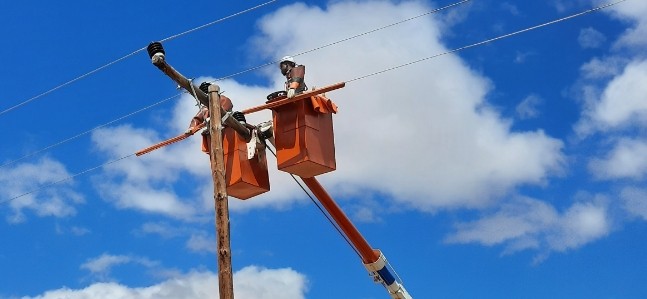
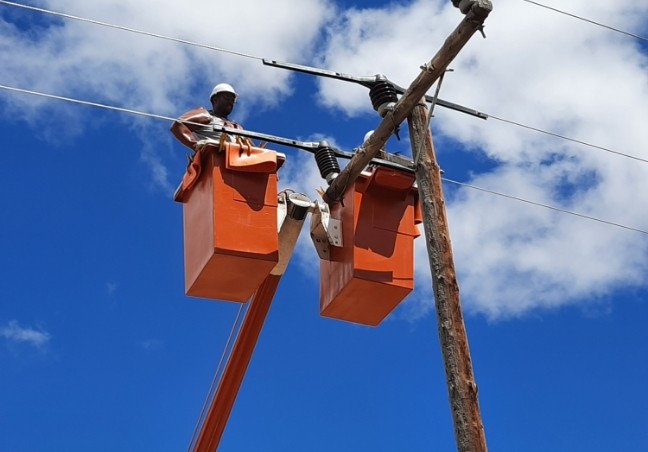
Working with Eskom’s Research, Testing and Development division, we developed a drone-based power line marking system that safely installs bird flight diverters on live power lines. The system reduces installation costs by 92% compared to helicopter deployment and reduces costs by 64% compared to installation with bucket trucks, while also eliminating the safety risks associated with working on live electrical infrastructure. This is one of over ten research projects done to solve real system challenges e.g. bird nests and mitigations, improve business operations and contribute to new bird knowledge.
Building Africa’s evidence base
Since 2011, we have helped build one of Africa’s largest wildlife roadkill datasets, recording 8,569 wildlife roadkill incidents across the BAKWENA N1/N4, TRAC N4, and N3 toll routes between 2012 and 2024. These data help identify mortality hotspots, guide mitigation, and improve infrastructure planning.
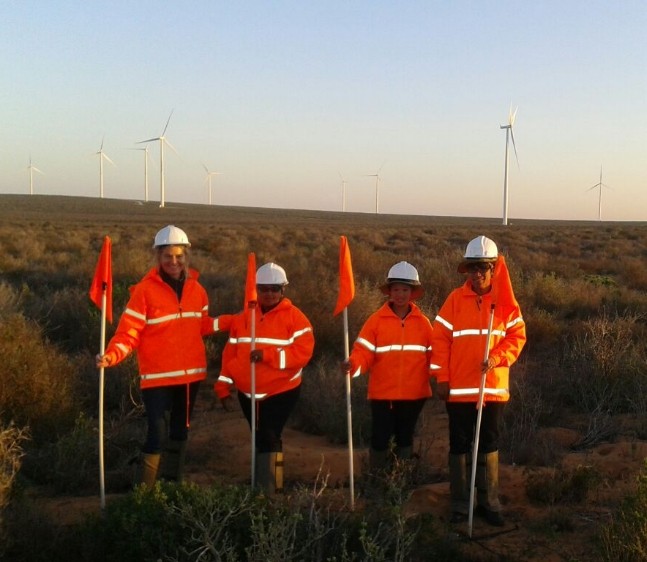
At Eskom’s Sere Wind Farm, our dedicated all-women biodiversity monitoring team has conducted continuous monitoring since the facility became operational in 2015, generating long-term data on bird, bat, and vegetation interactions that informs the responsible expansion of renewable energy.
We also helped develop and manage the 30 years old Central Incident Register which houses wildlife mortalities on electrical infrastructure in South Africa. The database was created in partnership with Eskom.
We have used the results from these databases to attend the African Conference on Linear Infrastructure and Ecology (ACLIE), which we have started to host since 2019. Over the past conferences we have hosted approximately 150 scientists, engineers, and conservation professionals, and brought data to advance infrastructure ecology and develop Africa-relevant solutions.
Influencing better infrastructure
planning
We developed the Threatened Species No-Go Map Tool and the Land-Use Decision Support Tool for Species of Conservation Concern, providing developers, planners, and government authorities with the information needed to avoid environmentally sensitive areas before infrastructure is built.
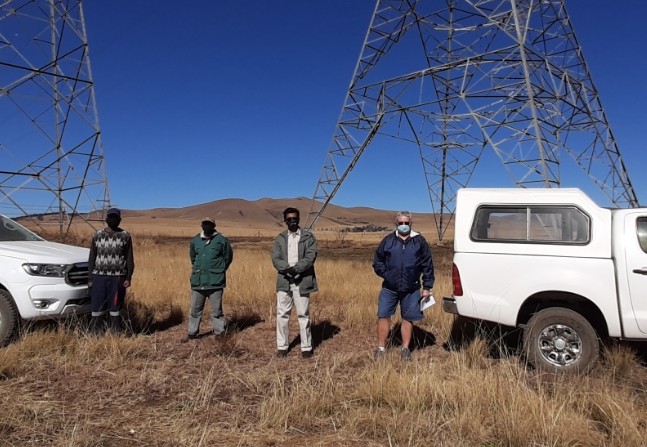
We have completed our first bird flyways research in Mpumalanga, South Africa, where we mapped and identified suitable areas for development in Mpumalanga. We intend to partner with governments and other stakeholders to map other regions to guide responsible infrastructure development in low-risk areas.
Reducing impacts on wildlife
We have surveyed 1,994 kilometres of power lines across the Western Cape and Karoo to identify collision hotspots affecting species such as Blue Cranes, Bearded Vultures, and Martial Eagles. These data guide targeted mitigation, including bird flight diverters, power line retrofits, and other wildlife-friendly infrastructure solutions.
WILDLIFE AND INFRASTRUCTURE
WHERE WE WORK
We work across the EWT’s priority
landscapes wherever roads,
powerlines, renewable energy
developments, railways, and other
infrastructure intersect with wildlife
Our work also extends beyond individual landscapes to national infrastructure networks, development corridors, and planning processes, helping ensure that infrastructure across Africa is designed and managed with biodiversity in mind.
WILDLIFE AND INFRASTRUCTURE
GET INVOLVED
Infrastructure will continue to
shape Africa’s future
Together, we can ensure it also protects Africa’s wildlife. Whether you choose to donate, partner with us, report wildlife interactions with infrastructure, or support wildlife-friendly planning and development, you can help build safer infrastructure for wildlife across the continent.