
A LEGACY
OF ACTION
A FUTURE
OF IMPACT

For more than five decades, the Endangered Wildlife Trust has tackled Africa’s most pressing conservation challenges by protecting wildlife, restoring ecosystems, and working with people to develop practical conservation solutions that create lasting impact.

As conservation challenges have evolved, so too has the way we work. What began with pioneering efforts to protect a handful of threatened species has grown into an organisation working across species, landscapes, and people - combining science, innovation, and partnerships to recover wildlife, reconnect habitats, strengthen communities, and secure a healthier future for Africa’s natural heritage.

Today, our Future Fit Strategy is guiding the next chapter of that journey. Building on more than five decades of experience, we’re scaling practical conservation solutions that respond to the challenges of today while delivering our long-term vision for Africa’s wildlife, ecosystems, and people.

To understand where we’re going, it’s worth understanding how we got here

FIVE DECADES OF CONSERVATION IMPACT

LOOKING TO
THE #NEXTFIFTY

“For more than 50 years, the EWT has been at the forefront of protecting Africa’s most iconic and threatened wildlife, while creating lasting benefits for people and the landscapes we all depend on. Our Future Fit Strategy is a bold commitment to turning the tide for endangered species, building resilient ecosystems, and supporting thriving communities across the continent we call home.”

Yolan Friedmann
Chief Executive Officer

FIVE DECADES OF CONSERVATION IMPACT

WHERE IT ALL BEGAN

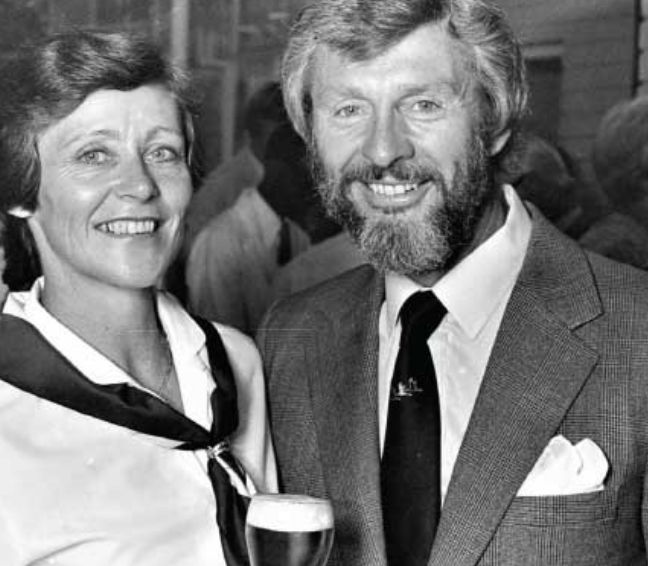
The Endangered Wildlife Trust was founded in 1973 by Clive Walker, James Clarke, and Neville Anderson, three conservationists united by a simple belief: Africa’s wildlife deserved a better future.

For Clive Walker, that belief became a lifelong calling. During a visit to the United States, two moments changed the course of his life. The first was watching renowned wildlife artist David Shepherd use his painting Tiger Fire to raise funds for conservation. The second was reading a sign beside a tiger enclosure at the Bronx Zoo:

“There were 300 known Rembrandt paintings in existence, and the last sold for one million dollars. How much do you think a Siberian Tiger is worth? There were only 150 left in the wild.”

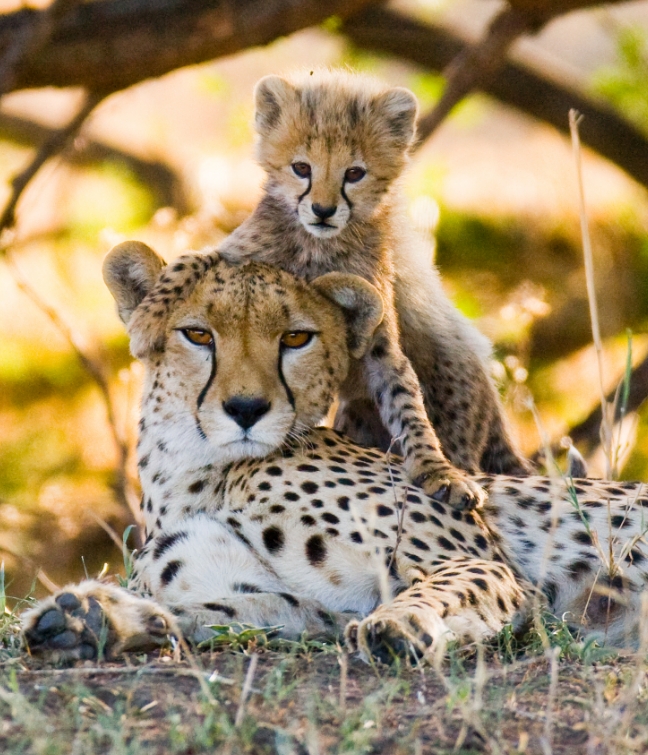
Inspired to act, Clive returned to South Africa and painted two Cheetahs. The sale of 250 signed limited-edition prints provided the seed funding that enabled the Endangered Wildlife Trust to begin its work.

More than fifty years later, the red Cheetah paw has become a symbol of practical conservation, scientific excellence, and an enduring commitment to protecting Africa’s wildlife.

FIVE DECADES OF CONSERVATION IMPACT

ROOTED IN PURPOSE

“I am proud to have been part of a team of scientists, researchers, field workers, men and women, fundraisers, administrative staff and Trustees who have made up the core of the Trust’s important role over these past forty years. We are all part of a global family and our village is the environment.”

Clive Walker
Co-Founder

FIVE DECADES OF CONSERVATION IMPACT

FOUR LEADERS
ONE ENDURING
PURPOSE

Since our founding in 1973, just four Chief Executive Officers have guided the Endangered Wildlife Trust. Clive Walker, Dr John Ledger, Prof Nick King, and Yolan Friedmann have each led the organisation through defining chapters of its history, ensuring the EWT has continually evolved to meet Africa’s changing conservation challenges while remaining true to the purpose established by our founders: taking practical action where it matters most.

Today, the EWT takes an integrated approach to conservation that recognises wildlife cannot be protected in isolation. Our work brings together species conservation, landscape restoration, freshwater protection, community partnerships, scientific research, policy engagement, and innovative technologies to address the complex pressures facing nature. By working across our eight strategic conservation landscapes, we deliver practical, science-led solutions that create lasting benefits for both wildlife and people.

That evolution is reflected in the impact we deliver today. In 2024/25 alone, the EWT improved, rehabilitated, or restored more than 114,000 hectares of critical conservation land, replenished 20 million cubic metres of freshwater, secured 93,000 hectares of critical grassland habitat through carbon offset projects, empowered more than 22,000 people through training and development initiatives, and improved the livelihoods of more than 20,000 people through employment and income-generating opportunities. These outcomes demonstrate that the strongest conservation solutions are those that protect wildlife, restore ecosystems, and create lasting benefits for the people who share them.

Our Leadership

1973

Clive Walker appointed founding Chief Executive Officer

1985

Dr John Ledger appointed Director

2003

Dr Nick King appointed Chief Executive Officer

2007

Yolan Friedmann appointed Chief Executive Officer

Five decades of conservation impact

Five Decades
of Conservation

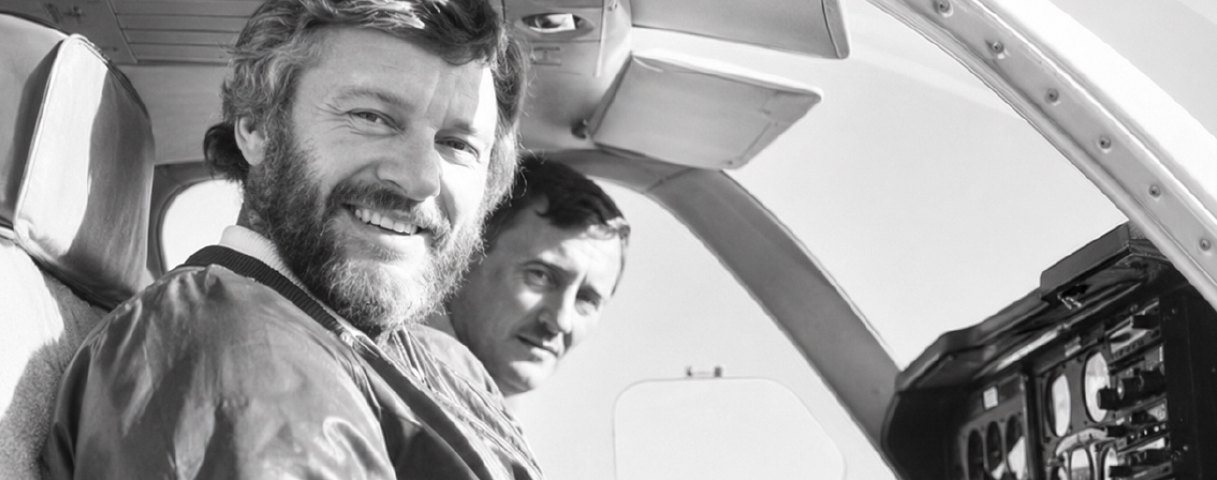
Two men seated in the cockpit of a light aircraft, black and white photograph

1970'sTaking conservation into the field

The Endangered Wildlife Trust was founded in 1973 by Clive Walker, James Clarke and Neville Anderson with a simple belief: conservation should be driven by action. From the outset, that meant supporting the research and fieldwork needed to understand and protect threatened species.

Vultures were among our earliest priorities. In our founding year, the Vulture Study Group became our first working group, monitoring and conserving the Cape Vulture and other vultures across southern Africa.

Cheetahs and Brown Hyaenas soon became part of this early conservation story. The sale of Clive Walker’s painting of two Cheetahs funded our first research project, enabling wildlife management student Andrew Lowry to study Cheetahs in Namibia’s Etosha National Park from 1974 to 1976. By recording their unique spot patterns, he could identify and count individual animals – an approach that still underpins Cheetah monitoring today.

In 1974, our third sponsorship supported equipment for Gus Mills’s Brown Hyaena research in the Kalahari. Gus went on to study the region’s hyaenas for 15 years, building knowledge of a species that was little understood at the time.

As our conservation work grew, so did its scope. By 1977, the Elephants and their Habitats Campaign had broadened our focus beyond our founding species. Much of this early conservation relied on funds raised through sales of prints of Clive’s paintings, while a dedicated volunteer Ladies Committee supported fundraising and advocacy.

From the beginning, the pattern was clear: identify a conservation challenge, build the knowledge needed to understand it, raise the funds to address it, and take action on the ground.
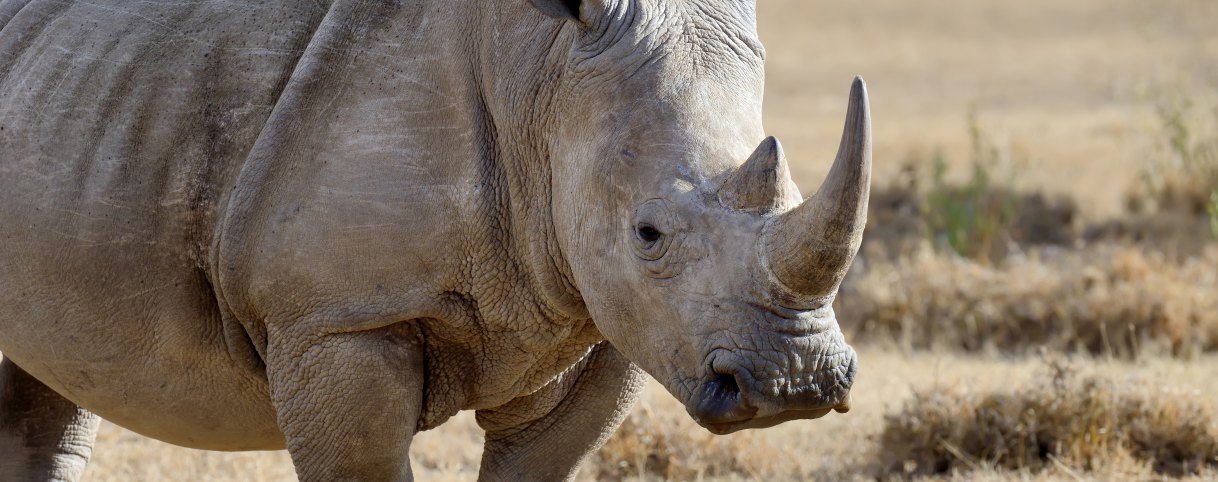
A rhino standing in dry grassland

1980'sTurning science into action

The 1980s strengthened the scientific foundation of our conservation work and demonstrated the power of combining research, people and action on the ground.

In 1980, Operation Rhino helped establish new Black Rhino populations by translocating eight animals from Hluhluwe to the Kruger National Park. In 1983, Dr Peter Mundy joined the EWT as our first Scientific Officer, strengthening our scientific capability and embedding science more firmly in our approach to conservation.

During the mid-1980s, we supported the reintroduction of Yellow-billed Oxpeckers to Hluhluwe Game Reserve. Forty-three birds were captured in Namibia’s Eastern Caprivi and transported to the reserve, helping to restore a species that had disappeared from South Africa early in the twentieth century. In 1986, we funded a national Blue Swallow survey that confirmed the species’ endangered status and provided evidence to guide its conservation.

Our conservation footprint also extended beyond South Africa. In Namibia’s Kunene Region, we supported community-based conservation associated with Garth Owen-Smith and Margie Jacobsohn. Local communities and community-appointed game guards played a direct role in protecting wildlife and addressing rhino and elephant poaching.

Back in South Africa, we found new ways to involve people directly in conservation science. In 1988/89, visitors to the Kruger National Park contributed photographs to an African Wild Dog survey. Cheetahs joined the photographic monitoring initiative in 1990, beginning an approach to carnivore monitoring that continues today.

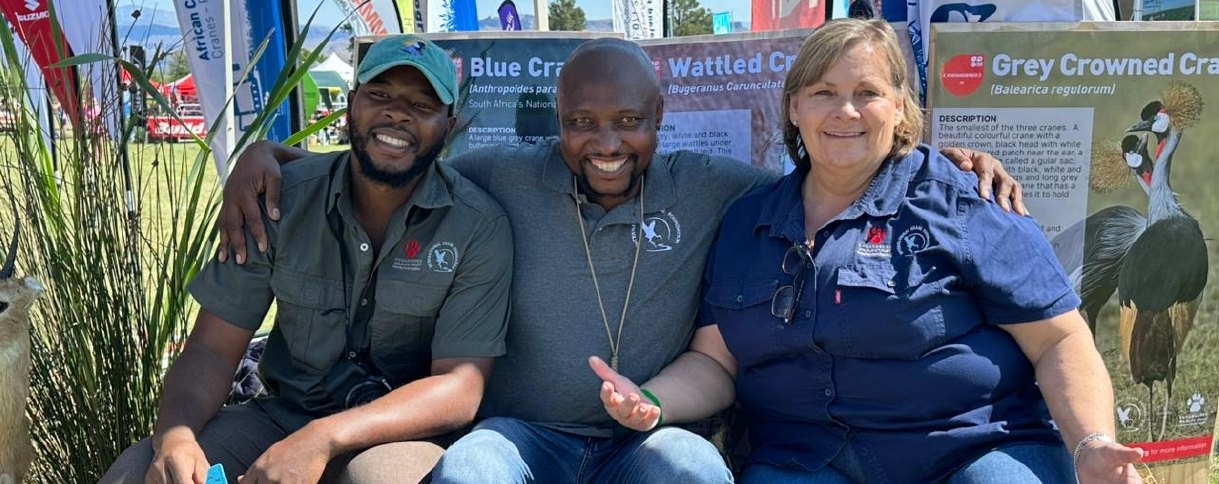
Three EWT team members in front of crane conservation display banners

1990'sBuilding conservation partnerships

The growing involvement of people in conservation carried into the 1990s, when partnerships became an increasingly important part of how we tackled shared challenges. We brought communities, conservation organisations, businesses and individuals together, extending the reach of conservation beyond any one organisation.

In 1994, we began our long-standing partnership with the International Crane Foundation, protecting threatened cranes by restoring wetlands and working with communities connected to these important ecosystems.

Partnerships also opened new ways to address threats to species and habitats. We commissioned research to support the campaign to save the Brenton Blue Butterfly, whose habitat later became a protected nature reserve. In 1996, our partnership with Eskom became the world’s first strategic partnership between a conservation organisation and an energy utility, pioneering practical solutions that continue to reduce wildlife deaths associated with power infrastructure.

Our investment in people also grew. When the Makuleke community regained their land in northern Kruger in 1998, young Makuleke students received EWT funding to study nature conservation and business, strengthening local conservation skills and leadership.

In 1999, we established the Conservation Leadership Group to attract, train and support aspiring conservationists from local communities. Its reach extended from training teachers in KwaZulu-Natal, Mpumalanga and North West Province to integrate environmental concepts into their classrooms, to supporting conservation education and skills development that ultimately benefited thousands of learners and students across South Africa.

Wildlife poisoning also became a major focus. Through the Poison Working Group, we worked with more than 17,000 farmers to promote safer practices and reduce poisoning risks to wildlife, beginning a response that would eventually extend across Africa.

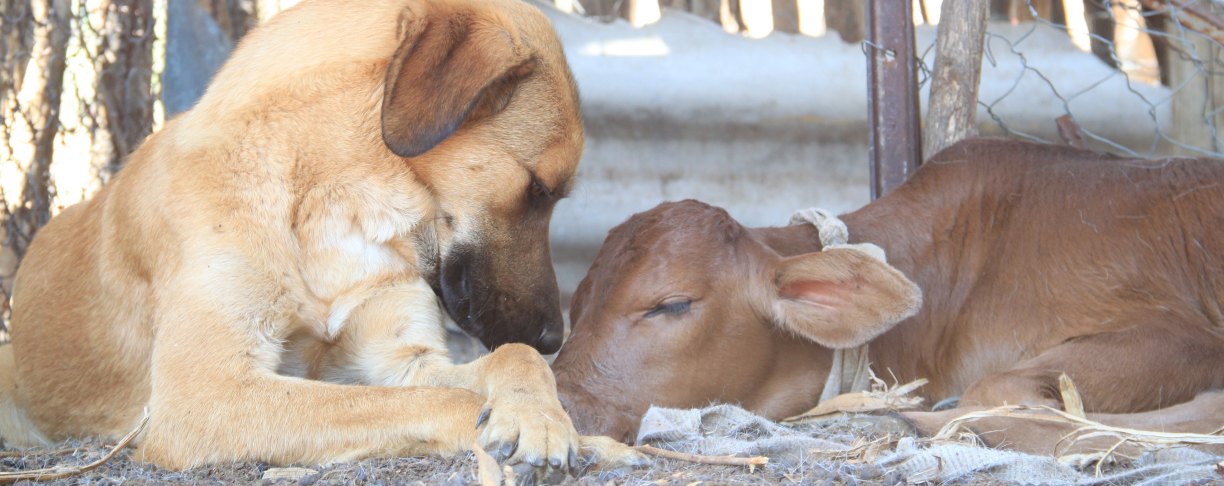
A livestock guardian dog lying nose to nose with a calf

2000'sDelivering solutions for wildlife and people

By the 2000s, the science, partnerships and practical approaches developed over the previous three decades were supporting conservation across more species and regions.

Some of our earliest conservation work also continued to evolve. In 2004, we brought our vulture, raptor and owl conservation together by merging the Vulture Study Group and Raptor Conservation Group into the Birds of Prey Working Group. By 2005, our crane conservation work had expanded into East Africa in partnership with the International Crane Foundation.

Long-term monitoring remained equally important. Working with SANParks, we conducted another major census of African Wild Dogs and Cheetahs in the Kruger National Park in 2004/05, with visitors submitting more than 4,000 photographs. A further census followed in 2008/09, and our scientists used the results to produce more reliable population estimates for both species. These surveys continued the public participation that began with the first African Wild Dog survey in 1988/89, an approach that remains part of our Cheetah monitoring today.

We also developed practical ways to address conflict between people and wildlife. In 2008, we launched the Livestock Guardian Dog Project, placing specially trained Anatolian and Maluti Shepherd Dogs with farmers to protect livestock from predators. The project reduces livestock losses and the risk of threatened carnivores being harmed in retaliation. Nearly two decades later, it continues at scale, protecting livestock, supporting farming communities and conserving threatened carnivores through a proven, non-lethal approach.

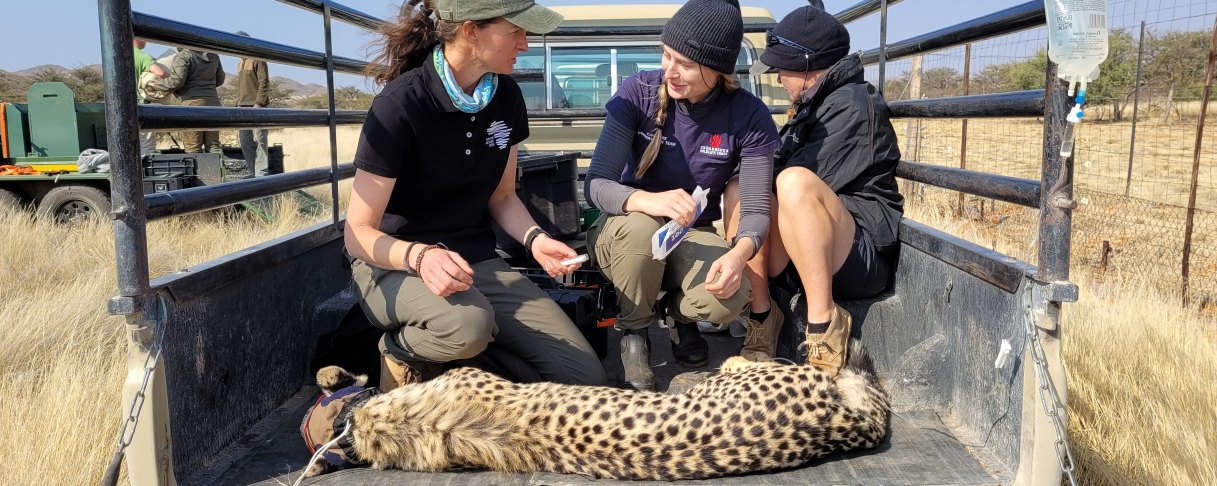
Field team kneeling beside a sedated Cheetah on the back of a vehicle

2010'sExpanding our impact

During the 2010s, these different strands of conservation began to deliver new forms of action, from species recovery and wildlife crime response to research on lesser-known species and direct habitat protection.

In Mozambique, the Dugong Emergency Protection Project worked with coastal communities to safeguard the last known viable Dugong population on Africa’s east coast.

Decades of carnivore conservation translated into major species recovery. The Cheetah Range Expansion Project strengthened South Africa’s managed Cheetah population and returned Cheetahs to Malawi after an absence of at least 20 years. Our long-term work with African Wild Dogs also reached an important milestone when the species returned to Gorongosa National Park in Mozambique in 2018.

As threats to wildlife changed, our response changed with them. We strengthened our response to wildlife crime by establishing the EWT Conservation K9 Unit, deploying specialist detection and tracking dogs across southern Africa.

We also expanded our focus to species that rarely attract public attention. In 2018, we contributed to research on the Albany Adder, a rare and highly threatened snake recorded in the wild only 12 times before 2017. Within five years, researchers increased the number of known individuals from 13 to 43, significantly expanding knowledge of this little-known species.

The decade also marked a new step in habitat conservation. In 2018, Medike Nature Reserve became the first nature reserve owned and managed by the EWT, adding direct habitat protection and management to our conservation approach.

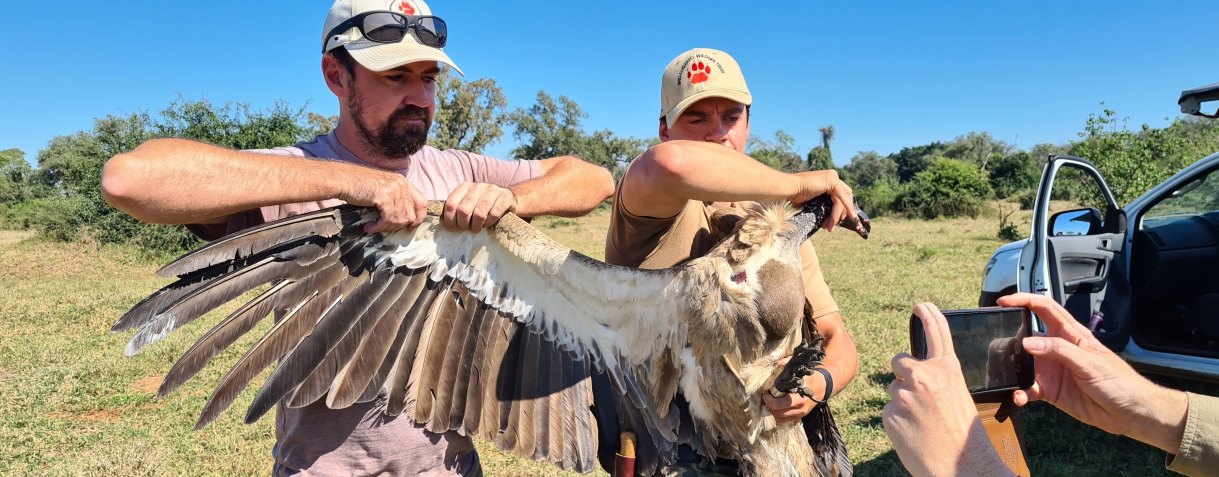
Two conservationists holding a vulture with its wing spread

2020'sDelivering the #nextfifty

Today, we are applying more than five decades of conservation experience at greater scale, bringing together the science, partnerships and practical solutions that have shaped the EWT since 1973.

Science continues to open new possibilities. In 2023, we used eDNA to rediscover De Winton’s Golden Mole after it had been lost to science for more than 80 years. Through targeted surveys, we also rediscovered Branch’s Rain Frog, the Blyde Rondavel Flat Gecko and the Blue-tailed Sandveld Lizard, generating the knowledge needed to protect species that can easily disappear unnoticed.

We are applying that knowledge across larger landscapes. We established Africa’s first Vulture Safe Zone, helped the first landowner in South Africa sign a carbon project development contract and, in 2025, secured the declaration of the Western Soutpansberg Nature Reserve.

Our conservation work has also connected environmental and human wellbeing. In Uganda’s Rukiga District, we partnered with the International Crane Foundation, the Margaret Pyke Trust, Rugarama Hospital and others on a project that linked the protection of Grey Crowned Crane habitat with healthcare, access to family planning and livelihoods.

Other conservation efforts demonstrate the value of sustained action over decades. Our response to wildlife poisoning, which began taking shape through the Poison Working Group, now reaches across Africa. Since 2017, we have trained more than 7,000 people in 19 countries in Wildlife Poisoning Response. In May 2025, we responded alongside SANParks to one of the largest vulture poisoning events in southern Africa, helping save 84 vultures following the poisoning of an elephant in the Kruger National Park.

Our long-running species projects continue to deliver results. Decades of crane conservation have contributed to the improved conservation status of the Wattled Crane, while the Greater Kruger Cheetah Census continues the public participation in Cheetah monitoring that began in Kruger more than 30 years ago.

As we look to the decades ahead, we are also growing international support for conservation in Africa. The establishment of Endangered Wildlife Trust USA extends our reach and creates new opportunities to support conservation as we take more than 50 years of action into the #NextFifty.

FIVE DECADES OF CONSERVATION IMPACT

A LEGACY MEASURED
BY WHAT COMES NEXT

The Endangered Wildlife Trust was created to solve conservation challenges.

That purpose continues to drive us today.

Every day, our teams are in the field protecting wildlife, restoring ecosystems, working with communities, and developing practical solutions to some of Africa’s most complex conservation challenges. Guided by our Future Fit Strategy, we’re not simply continuing our story, we’re writing the next chapter of conservation across Africa.

The greatest measure of our first fifty years will be the difference we make in the #nextfifty