KGALAGADI

STRATEGIC CONSERVATION
LANDSCAPE

Protecting one of Africa’s great desert wildernesses

We are expanding conservation across the Kgalagadi, helping protect iconic desert wildlife while strengthening the ecosystems and partnerships that support both people and nature.

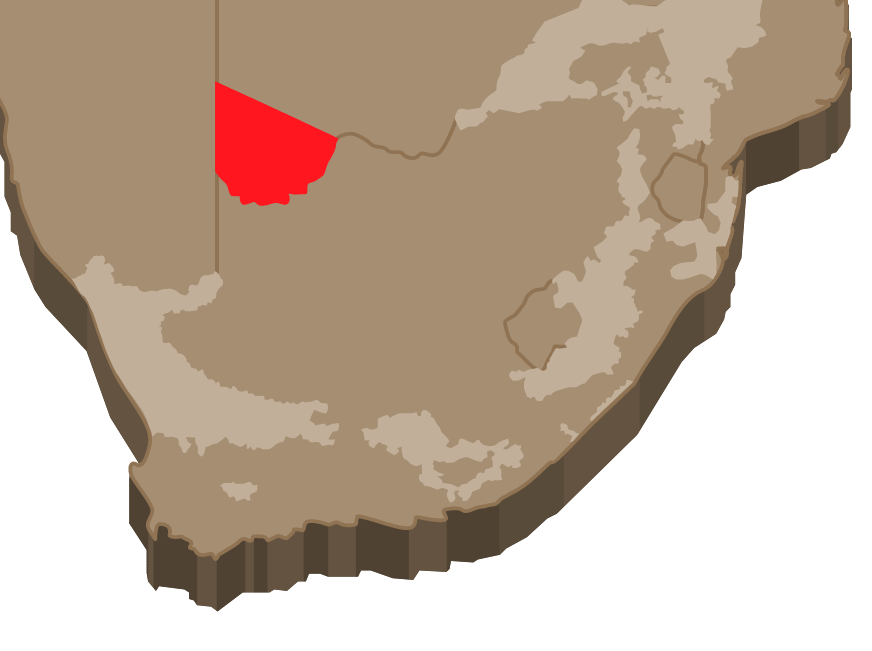
3D map of the Kgalagadi Strategic Conservation Landscape
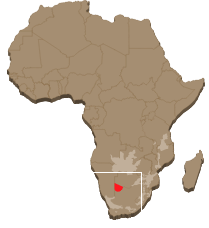
Locator map showing the Kgalagadi Strategic Conservation Landscape in Africa

Keeping the
Kgalagadi wild

Spanning the border between South Africa and Botswana, the Kgalagadi is a vast semi-arid landscape of red dunes, dry riverbeds and open grasslands

KGALAGADI

COUNTING THE
KALAHARI’S KINGS

Travelling more than 300,000 kilometres through one of the world’s harshest environments, the team searched for the black-maned lions that define this remarkable landscape. Every sighting, photograph, whisker-spot pattern, and pawprint added another piece to the puzzle. Back from the field, these records were used to identify individual lions and build one of the clearest pictures yet of the population.

The results brought welcome news. The survey found that Kgalagadi’s lion population is stable and healthy, with a balanced number of males and females. This knowledge is helping guide conservation decisions, ensuring the Kalahari remains one of the last places where these legendary lions continue to roam free.

Across the Kgalagadi, science is helping guide better conservation decisions, ensuring that one of Africa’s last great wildernesses continues to support healthy wildlife populations and the people who share this extraordinary landscape.

Two black-maned Kalahari lions

KGALAGADI

WHY THE
KGALAGADI MATTERS

A desert full of life

The Kgalagadi Transfrontier Park is one of Africa’s largest and most intact conservation landscapes. Covering approximately 59,000 km² across Botswana and South Africa, its rolling red dunes, ancient riverbeds, pans, and sparse savannah.

It supports an extraordinary diversity of desert-adapted wildlife. More than 60 mammal species and 300 bird species occur here, including the iconic blackmaned Kalahari Lion, Cheetah, leopard, African Wild Dog, Temminck’s Pangolin, and an impressive diversity of vultures and other birds of prey.

What makes the Kgalagadi unique is its scale and connectivity. As Africa’s first Transfrontier Park, wildlife can still move freely across an international border, allowing ecological processes that have shaped this landscape for thousands of years to continue. This freedom of movement is essential for maintaining healthy wildlife populations in one of the world’s most challenging environments.

The Kgalagadi is also a landscape of deep cultural significance. For generations, the Khomani San and Mier communities have lived alongside and cared for this remarkable wilderness. Protecting the Kgalagadi means conserving not only its iconic wildlife, but also the natural and cultural heritage that makes this landscape unlike anywhere else on Earth.

Species we protect

Carnivores icon

Carnivores

Birds of prey icon

Birds of
Prey

Amphibians icon

Threatened
Endemic Species

KGALAGADI

CONSERVATION
IN ACTION

Conservation in the Kgalagadi is guided by science, shaped by partnership, and grounded in one of Africa’s most remarkable transboundary landscapes. As we expand our work in the region, we are working alongside conservation authorities, researchers, and local communities to better understand wildlife populations, reduce threats, and help ensure species can continue to move freely across a landscape defined by ecological processes rather than political boundaries.

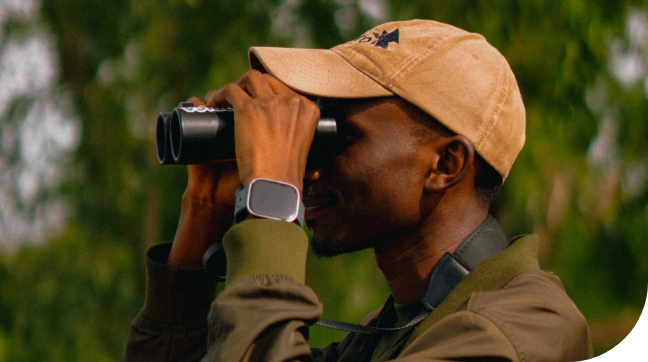
Researcher looking through binoculars

Supporting science-led conservation

Good conservation begins with good information. Building on our recent lion survey, we are working with conservation authorities and research partners across Botswana and South Africa to better understand wildlife populations and ecosystem health. This knowledge helps guide conservation action and ensures decisions are based on the best available evidence.

Conserving
connected landscapes

Many of the Kgalagadi’s species depend on vast, connected landscapes to survive. We are supporting efforts to strengthen habitat connectivity within and beyond the Kgalagadi Transfrontier Park, helping maintain wildlife movement across international boundaries. By 2030, the goal is to help secure at least 150,000 hectares of core habitat and strengthen ecological corridors that allow Lions, African Wild Dogs, Cheetahs, and other wildlife to move freely across the landscape.

Cheetah walking through dry grassland
Dirt road through Kalahari grassland

Restoring ecosystems and building
climate resilience

Healthy ecosystems are more resilient to drought, climate variability, and environmental change. We support habitat restoration initiatives that stabilise degraded dunes, restore native vegetation, improve ecosystem function, and explore innovative approaches to water management. These interventions strengthen ecological resilience while supporting both wildlife and local livelihoods.

Reducing threats to wildlife

Poaching, wildlife trafficking, snaring, poisoning, and human-wildlife conflict continue to threaten the Kgalagadi’s wildlife. We work with conservation partners to strengthen ranger capacity, improve surveillance, support wildlife crime prevention, and collaborate with law enforcement agencies to create safer conditions for pangolins, vultures, lions, and other threatened species.

Bat-eared fox standing in the grass
Road sign in the Kgalagadi

Working alongside communities

The future of the Kgalagadi depends on the people who know it best. Local and Indigenous communities rely on the landscape for cultural heritage, agriculture, and eco-tourism, and benefit directly from conservation employment, wildlife monitoring, eco-tourism initiatives, and local stewardship. By providing the science needed to improve human-wildlife coexistence and recognising Indigenous knowledge, cultural heritage, and community leadership, we are helping to ensure that conservation delivers lasting benefits for both people and wildlife.

KGALAGADI

OUR CONSERVATION
APPROACHES

Specialist expertise. Greater conservation impact.

Many of the conservation challenges facing the Kgalagadi landscape are shared across our eight strategic conservation landscapes

Our Strategic Conservation Approaches bring together the expertise, innovation, partnerships, and tools needed to address these challenges at scale. By combining specialist knowledge with on-the-ground implementation, we apply these approaches across our Strategic Conservation Landscapes and in other priority areas where we can deliver strategic conservation outcomes.

Sustainable finance icon

Sustainable Finance

Securing the long-term investment and innovative financing needed to sustain conservation, ecosystem restoration and community stewardship.

Wildlife infrastructure icon

Wildlife and Infrastructure

Reducing the impacts of infrastructure on wildlife and nature while promoting development that is better planned, more responsible and compatible with conservation.

Biodiversity business icon

Biodiversity and Business

Working with businesses to integrate nature into decision-making, reduce environmental impacts, and support more sustainable business practices.

People in conservation icon

People in Conservation

Supporting communities, farmers, landowners and local partners to strengthen stewardship, sustainable livelihoods and coexistence between people and wildlife.

Wildlife in trade icon

Wildlife in Trade

Combating wildlife crime and illegal trade through research, intelligence, partnerships, policy engagement and support to law-enforcement agencies.

Conservation tools and technology icon

Conservation Tools and Technology

Using science, technology and innovation to detect threats, monitor wildlife, guide decisions and improve conservation responses across vast and complex landscapes.

KGALAGADI

GET INVOLVED

Support conservation
in the Kgalagadi

Your support helps us expand conservation across the Kgalagadi, protecting iconic desert wildlife, strengthening science-led conservation, and safeguarding one of Africa’s most remarkable transboundary landscapes for future generations.

Partner with us

Protecting the Kgalagadi depends on strong partnerships. We work alongside conservation authorities, researchers, Indigenous communities, landowners, businesses, conservation organisations, and funders to strengthen conservation across this extraordinary landscape. If you’d like to help shape the future of conservation in the Kgalagadi, we’d love to hear from you.

Stay connected

We’re expanding our work in the Kgalagadi and building new partnerships to protect its iconic wildlife and unique desert ecosystems. Follow our journey and discover the people, places, and conservation stories shaping the future of this remarkable landscape.