
SAVANNAH
STRATEGIC CONSERVATION
LANDSCAPE
Over five decades of conservation across the
Savannah Landscape
The Savannah Landscape has been at the heart of our conservation work for over more than five decades. Across this extraordinary region, we protect threatened wildlife, restore and reconnect ecosystems, reduce critical threats and work alongside communities and conservation partners to secure a more resilient future for people and nature.
A diverse
Savannah landscape
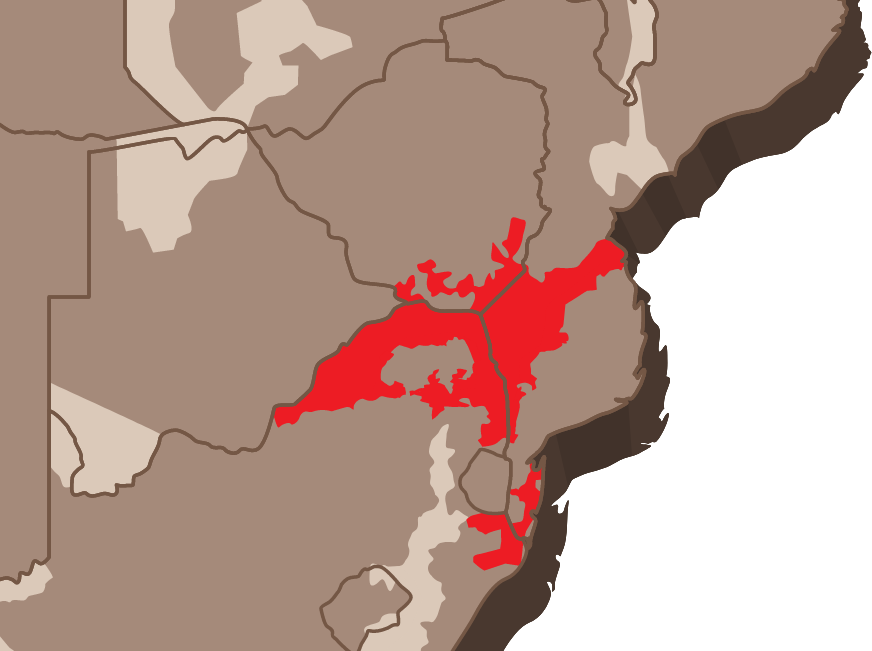
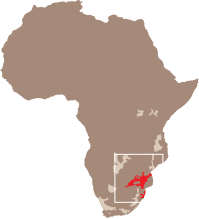
From open grasslands and wooded savannahs to river valleys and seasonal wetlands, the Savannah landscape stretches across northern South Africa, towards the borders with Botswana and Zimbabwe
SAVANNAH
95% FEWER LIVESTOCK
LOSSES. THOUSANDS OF
HECTARES SAFER FOR
WILDLIFE
Across our Savannah Strategic Conservation Landscape, conflict between predators and livestock remains one of the greatest threats to Africa’s carnivores. When livestock is lost, farmers often resort to poisoning, gin traps, shooting, and hunting to protect their livelihoods. These indiscriminate methods kill far more than the intended predator, threatening leopards, cheetahs, African Wild Dogs, vultures, and many other species.
We are proving there is a better way.
Our Livestock Guardian Dog Project works alongside farmers to prevent livestock losses before they occur. We place specially trained guardian dogs with sheep and goat herds, improve livestock husbandry practices, and provide ongoing veterinary care, training, and support. In return, participating farmers commit to ending the lethal control of predators on their land.
The results have been transformative. Since launching the project, we have placed 241 Livestock Guardian Dogs on more than 200 commercial and community farms across South Africa. Farmers report reductions in livestock losses of between 95% and 100%, while our work has helped secure 453,000 hectares of farmland where predators are protected rather than persecuted. This is more than a conservation success story. It demonstrates that practical, science-based solutions can protect livelihoods while creating safer landscapes for Africa’s threatened carnivores. Every guardian dog placed helps turn conflict into coexistence.

SAVANNAH
WHY THE
SAVANNAH MATTERS
Where healthy ecosystems sustain
wildlife, water, and communities
Stretching across parts of South Africa, Mozambique, Zimbabwe, and Botswana,
the Savannah Strategic Conservation Landscape encompasses some of
southern Africa’s most significant conservation areas, including the Greater
Limpopo and Greater Mapungubwe regions. Rivers, woodlands, grasslands,
protected areas, and working landscapes combine to support exceptional
ecological diversity and some of the continent’s most iconic wildlife.
The landscape is a stronghold for a remarkable range of species. Large
carnivores including lions, leopards, cheetahs, and African Wild Dogs share the
landscape with birds of prey, reptiles, amphibians, butterflies, and one of South
Africa’s most important concentrations of cycads. Together, these species reflect
the richness and complexity of the ecosystems that define the Savannah.
Beyond its ecological significance, the landscape demonstrates what can be
achieved through long-term conservation investment and collaboration.
Protected area expansion, habitat restoration, stewardship initiatives, and
partnerships between communities, landowners, conservation organisations, and
governments have helped create a landscape where wildlife and people continue
to coexist and thrive.
Species we protect

Carnivores

Birds of
Prey

Reptiles

Amphibians

Butterflies

Cycads
SAVANNAH
CONSERVATION
IN ACTION
For more than five decades, we have protected the Savannah Landscape through science, partnership, and practical conservation. Together with communities, landowners, conservation authorities, researchers, and fellow conservation organisations, we help secure the landscapes, species, and natural systems that sustain life across southern Africa.

Expanding and connecting
protected landscapes
Wildlife needs space to survive, move and recover.
Through Biodiversity Stewardship agreements, protected-area expansion,
ecological corridors and community conservation initiatives, we help secure and
reconnect critical habitats across the Savannah Landscape.
One of our flagship achievements is the Western Soutpansberg Nature Reserve,
where we brought multiple landowners together to protect more than 11,600
hectares of ecologically important habitat.
Across the wider landscape, we are working to strengthen connections between
protected areas, community lands and privately managed properties. These
connected landscapes allow wildlife to move more safely, support healthier and
more resilient populations and help ecosystems adapt to a changing climate.
Restoring rivers, wetlands, and
natural systems
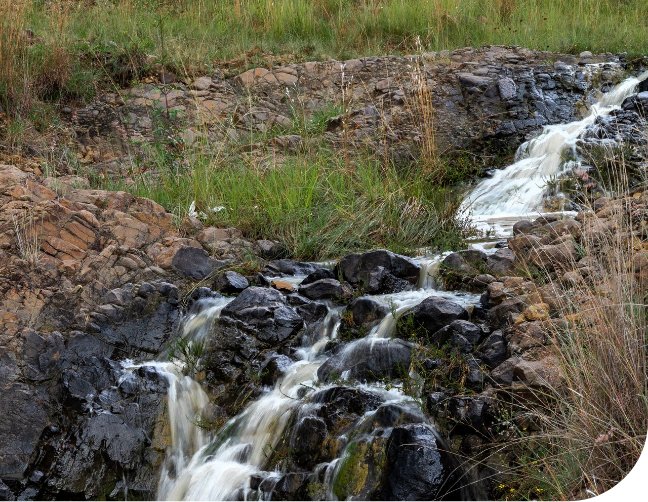
Healthy landscapes begin with healthy rivers, wetlands and catchments.
By removing invasive alien plants, rehabilitating degraded land, restoring
wetlands and improving catchment management, we strengthen natural
ecosystem function, improve water security and build resilience to climate
change.
In the Soutpansberg, this work has returned millions of litres of water to the
environment each year, demonstrating how ecological restoration can generate
meaningful benefits for biodiversity, downstream communities and the wider
economy.
Our aim is to restore the natural systems that sustain life across the Savannah
Landscape, from mountain catchments and river corridors to rangelands,
wetlands and woodlands.


Conserving species and reducing
threats
Poaching, snaring, wildlife poisoning, illegal wildlife trade, habitat loss and
conflict with people continue to place immense pressure on threatened wildlife
across the Savannah Landscape.
The EWT is responding at an unprecedented scale.
Working through a vast network of conservation partners, protected areas,
operations rooms, field teams and law-enforcement agencies, we help detect
threats earlier, coordinate rapid responses and strengthen protection across
some of southern Africa’s most important wildlife areas.
Our teams and partners have removed tens of thousands of snares from the
landscape, preventing the injury and death of countless antelope, carnivores and
other animals. At the same time, advanced wildlife-monitoring and alert
technologies are transforming the way poisoning, snaring and poaching incidents
are detected and addressed.
Through initiatives such as Eye in the Sky, GPS-tracked vultures act as sentinels
across vast and often inaccessible areas. Their movements can reveal
carcasses, poisoning sites, suspicious feeding events and potential poaching
activity, generating alerts that allow response teams to reach incidents far more
quickly than was previously possible.
Since the inception of these wildlife-monitoring and alert tools, rapid detection
and response efforts have contributed to saving more than 2,500 vultures,
alongside countless other scavengers and carnivores that could have been killed
by poisoned carcasses and bait sites.
The system has also helped teams detect wildlife poisoning events, locate
poison sources, identify poaching camps, recover injured animals and direct field
patrols towards emerging threats.
By combining field expertise, satellite tracking, real-time alerts, intelligence, lawenforcement
support and strong local partnerships, we are creating safer
conditions for African Wild Dogs, cheetahs, lions, vultures and many other
threatened species.
This work demonstrates the power of technology when it is placed in the hands
of capable conservation partners and rapid-response teams.
Strengthening stewardship
Conservation succeeds when local people are recognised as leaders, partners
and custodians of the landscapes in which they live.
We support communities, traditional leaders, landowners and local conservation
champions through training, mentorship, conservation employment, technical
assistance and community-led stewardship.
This includes strengthening conservation leadership, supporting sustainable
livelihoods, facilitating human-wildlife co-existence and creating opportunities
linked to restoration, wildlife management and responsible natural-resource use.
By building local capacity and ensuring that conservation generates tangible
benefits, we help create lasting support for wildlife and the ecosystems that
sustain both people and nature.


Guiding conservation through science
Every conservation decision is stronger when it is informed by reliable evidence.
Through biodiversity surveys, BioBlitz expeditions, camera trapping, satellite
tracking, environmental DNA, ecological monitoring and other conservation
technologies, we improve understanding of species, habitats, threats and
ecological processes across the Savannah Landscape.
This information helps us identify conservation priorities, track changes over
time, evaluate the impact of our work and direct limited resources to the places
where they can make the greatest difference.
Science does not sit apart from our conservation action. It underpins the
decisions we make, the partnerships we build and the solutions we implement on
the ground.
SAVANNAH
OUR CONSERVATION
APPROACHES
Specialist expertise. Greater conservation impact.
Many of the conservation challenges facing the Savannah Landscape are shared
across our eight Strategic Conservation Landscapes.
Our Strategic Conservation Approaches bring together the expertise, innovation,
partnerships, and tools needed to address these challenges at scale. By
combining specialist knowledge with on-the-ground implementation, we apply
these approaches across our Strategic Conservation Landscapes and in other
priority areas where we can deliver strategic conservation outcomes.

Sustainable Finance
Securing the long-term investment and innovative financing needed to sustain conservation, ecosystem restoration and community stewardship.

Wildlife and Infrastructure
Reducing the impacts of infrastructure on wildlife and nature while promoting development that is better planned, more responsible and compatible with conservation.

Biodiversity and Business
Working with businesses to integrate nature into decision-making, reduce environmental impacts, and support more sustainable business practices.

People in Conservation
Supporting communities, farmers, landowners and local partners to strengthen stewardship, sustainable livelihoods and coexistence between people and wildlife.

Wildlife in Trade
Combating wildlife crime and illegal trade through research, intelligence, partnerships, policy engagement and support to law-enforcement agencies.
