EASTERN CAPE
STRATEGIC CONSERVATION
LANDSCAPE
Protecting one of South Africa’s most diverse landscapes through habitat restoration and species recovery
We protect the Eastern Cape’s reptiles, cranes, birds of prey, carnivores, and amphibians while restoring the connected landscapes that support wildlife, water, and people.
Connecting habitats,
sustaining life
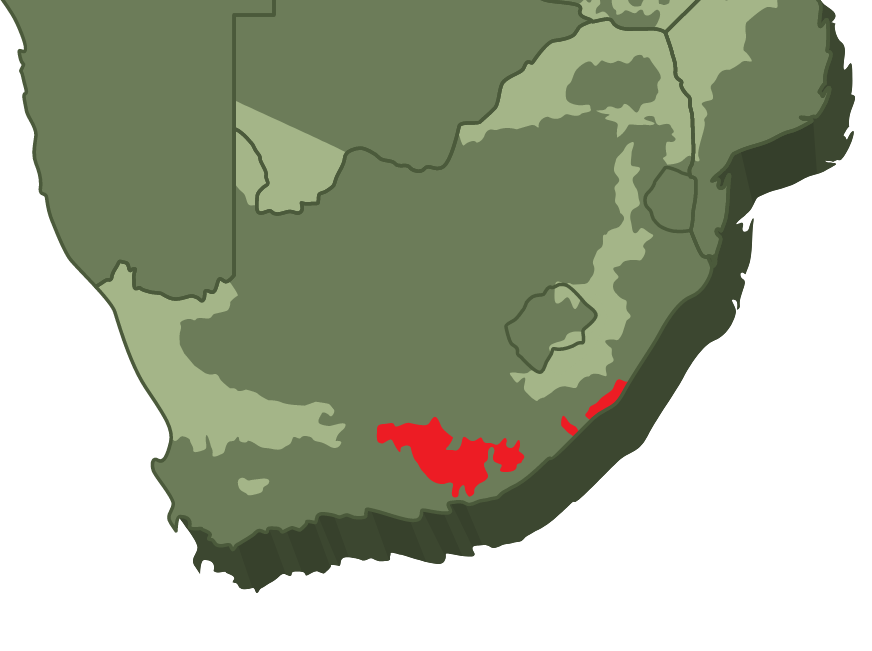
From mountain grasslands and river valleys to thicket and coastline, this landscape stretches across South Africa’s Eastern Cape province
EASTERN CAPE
THE RETURN
OF THE VULTURES
For decades, Cape Vultures were missing from the skies above the Eastern Cape. Poisoning, habitat loss, and other growing threats had driven them from places where they had once nested and soared.
Then something remarkable happened.
Working with the EWT, one Karoo farmer made a simple but powerful decision. He declared his farm a Vulture Safe Zone, committing to eliminate poisons and create a safer landscape for vultures. Neighbouring farmers soon followed. What began on a single farm grew into a network of more than 90 landowners, protecting over 730,000 hectares of the Eastern Cape.
In 2024, the vultures returned. For the first time in more than 30 years, Cape Vultures were once again seen soaring above the Great Fish River Nature Reserve and returning to ancient cliffside roosts that had stood empty for decades. Their return is about far more than one species. It shows what is possible when people choose to restore the landscapes they share with wildlife. Across the Eastern Cape, reconnecting habitats, reducing threats, and building partnerships are creating the conditions for nature to recover.
EASTERN CAPE
WHY THE EASTERN
CAPE MATTERS
Where mountains, forests, grasslands, and coast come together
The Eastern Cape is one of South Africa’s most remarkable regions. Stretching from the semi-arid Karoo to indigenous forests, mountain catchments, grasslands, thicket, and coastal ecosystems, it brings together an extraordinary range of habitats within a single landscape. More than 7,000 plant species occur here, alongside many of the country’s most distinctive and threatened wildlife species.
This rich natural heritage has made the Eastern Cape a stronghold for species found nowhere else, including the Albany Adder and Amatola Toad, while also supporting important populations of cranes, vultures, birds of prey, and carnivores. Yet many of these habitats have become fragmented over time, limiting wildlife movement and reducing the health of the landscape.
The Eastern Cape presents one of South Africa’s greatest opportunities for restoration. Reconnecting habitats and securing ecological corridors creates space for species to recover while strengthening the natural systems that provide clean water, fertile soils, and other benefits that support communities and livelihoods across the region.

Species we protect
Carnivores
Birds of
Prey
Cranes
Reptiles
Amphibians
EASTERN CAPE
CONSERVATION
IN ACTION
Protecting the Eastern Cape means reconnecting landscapes. We restore habitats, secure ecological corridors, recover threatened species, reduce risks to wildlife, and build the partnerships needed to protect one of South Africa’s most remarkable regions.
Reconnecting landscapes
Many of the Eastern Cape’s habitats have become fragmented, making it harder for wildlife to move across the landscape. We work with landowners and conservation partners to reconnect forests, grasslands, thicket, and other important habitats through ecological corridors, stewardship partnerships, and protected area expansion. By 2030, we aim to help secure formal protection for at least 50,000 hectares of critical habitat, creating connected landscapes where wildlife can move and recover.
Restoring water catchments
Healthy landscapes begin with healthy ecosystems. We restore degraded habitats by clearing invasive alien plants from key water catchments, allowing natural vegetation to recover and improving water availability. To date, we have cleared more than 750 hectares of invasive vegetation, strengthening ecosystem health and climate resilience across the landscape.
Recovering threatened species
The Eastern Cape is home to some of South Africa’s most threatened wildlife. We reduce threats such as poisoning, snaring, habitat loss, and illegal persecution while supporting the recovery of vultures, cranes, reptiles, amphibians, and carnivores. Our work also includes establishing Vulture Safe Zones and supporting the reintroduction of species such as cheetahs into suitable habitat.
Planning for people and wildlife
As the Eastern Cape grows, conservation and development must move forward together. We work with industry, government, and landowners to reduce the impacts of renewable energy projects, powerlines, and other infrastructure on wildlife. By guiding planning and mitigation, we help create landscapes where development takes place with nature in mind.