
ENDANGERED
WILDLIFE
TRUST USA
ABOUT US
YOUR CONNECTION
TO CONSERVATION
IN AFRICA
From the United States, you can play a direct role in protecting Africa’s extraordinary wildlife and wild places.
Today, the Endangered Wildlife Trust USA gives American donors a direct connection to the EWT’s conservation in Africa, turning US generosity into measurable results for species, landscapes and people across the continent.
As a US-registered 501(c)(3) nonprofit, the Endangered Wildlife Trust USA provides a tax-deductible way to support more than 50 years of science-led conservation across Africa.
Through the Endangered Wildlife Trust USA, American individuals, foundations and corporations can contribute directly to the EWT’s on-the-ground conservation across eight Strategic Conservation Landscapes, helping protect some of Africa’s most iconic and threatened wildlife, including cheetahs, lions, African wild dogs and vultures. Donations are tax-deductible to the fullest extent permitted by US law, with tangible, measurable conservation results: a species rediscovered, a wetland restored, a new protected reserve established or a wildlife trafficking operation shut down. It is a direct, high-leverage investment in protecting Africa’s wildlife, securing the ecosystems on which life depends and improving the future for the people who share these landscapes.

ABOUT US
WHY GIVE THROUGH
THE ENDANGERED
WILDLIFE TRUST USA?

We find what others can’t
Using environmental DNA (eDNA), specialist detection dogs, advanced field science, and cutting-edge technology, our teams locate species that vanished from scientific records, strengthen biodiversity monitoring, and generate the hard evidence that drives real conservation decisions.

We protect entire landscapes, not just isolated animals
Wildlife can’t survive in fragmented pockets. We restore habitats, expand protected areas, reconnect wildlife corridors, and strengthen whole ecosystems so wildlife and people thrive together for the long haul.

We build conservation with people
Lasting protection depends on the communities who share these landscapes. We partner with local communities, landowners, governments, researchers, and conservation allies to build solutions that protect wildlife while improving livelihoods and resilience.

We play the long game
Conservation isn’t won in a single grant cycle. Since 1973, we’ve built the trusted, on-the-ground partnerships across Africa that make science-backed, lasting impact possible, and your support as a US donor sustains that continuity.
ABOUT US
CONSERVATION
IN ACTION
The EWT rediscovers a species lost
for 80 Years
Using environmental DNA and specialist field surveys, our scientists rediscovered De Winton’s Golden Mole, unseen since 1937, in a landmark 2021 rediscovery. Breakthroughs like this generate the vital data needed to protect species that might otherwise vanish for good.


Protecting women, communities,
and wetlands
Through our partnership with the International Crane Foundation, the Margaret Pyke Trust, Rugarama Hospital, and other allies in Rwanda, we built an integrated conservation, healthcare, and livelihoods program with results that speak for themselves: women in the program were 25% more likely to choose effective long-acting family planning methods, more women gained access to healthcare, and independent analysis found participants were better protected from gender-based violence, all while conserving wetland habitat for Endangered Grey Crowned Cranes.
Neighbors uniting to create new
protected areas
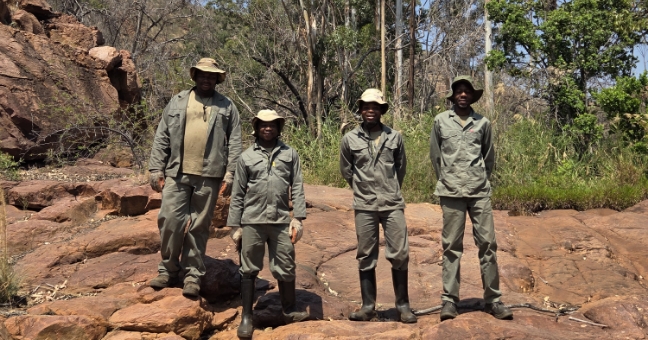
In South Africa’s Western Soutpansberg, neighboring landowners voluntarily joined their properties to establish a brand-new protected nature reserve, proof that partnership-led conservation, the kind your donation funds, delivers lasting protection where it’s needed most.
ABOUT US
THE EWT
AT A GLANCE

50+
Years protecting
Africa’s wildlife

8
Strategic conservation
landscapes Africa

100%
Science-led conservation, backed by
practical action on the ground

US
US-registered 501(c)(3) nonprofit
organization
ABOUT US
FREQUENTLY
ASKED QUESTIONS
Yes. The Endangered Wildlife Trust USA is a tax-exempt organization under Section 501(c)(3) of the US Internal Revenue Code (EIN: 33-2261884). Donations are tax-deductible to the fullest extent permitted by US law.
The Endangered Wildlife Trust USA is the official US affiliate of the Endangered Wildlife Trust. Founded in 1973, the Endangered Wildlife Trust has spent more than 53 years protecting threatened species and ecosystems across Africa. Through the Endangered Wildlife Trust USA, American donors can support this proven conservation work while receiving U.S. tax benefits for eligible contributions.
Your support directly funds wildlife conservation and species recovery, habitat protection and restoration, wildlife crime prevention, scientific research and innovation, community conservation and sustainable livelihood projects across our Strategic Conservation Landscapes in Africa, with the accountability and transparency donors expect.
Yes. As a registered 501(c)(3), every gift you make through Endangered Wildlife Trust USA is tax-deductible under US law, no complicated cross-border giving required.
ABOUT US
ACCOUNTABILITY
YOU CAN TRUST
Responsible stewardship is at the core of everything we do. We take our responsibility to donors seriously. We carefully track and manage every contribution made through the Endangered Wildlife Trust USA and direct these funds to our science-led conservation across Africa.
ABOUT US
STAY CONNECTED
Subscribe to our newsletter for hopeful conservation breakthroughs, scientific discoveries, and field updates, or follow us on social media to hear stories of African conservation in action.
ABOUT US
READY TO PROTECT
AFRICA’S WILDLIFE?
Every species rediscovered. Every landscape protected. Every wildlife trafficking case stopped. Every community taking action to protect the natural places they share.
Each one starts with someone in the US who decided to act.
Whether you make a one-time gift, become a monthly donor or plan a legacy gift, your tax-deductible contribution drives conservation action across Africa and helps us protect wildlife for generations to come.