DRYLANDS
STRATEGIC CONSERVATION
LANDSCAPE
Protecting one of southern Africa’s most important arid landscapes
We protect the Drylands’ unique wildlife while restoring habitats, strengthening climate resilience and working alongside the people who have adapted to life in one of Africa’s most water-scarce landscapes.
Protecting life
in the Drylands
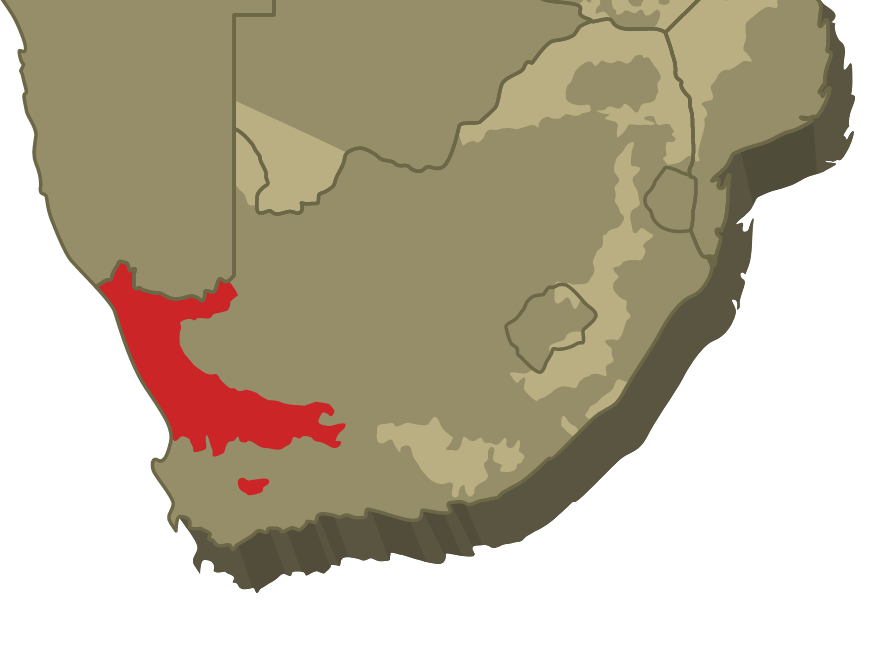
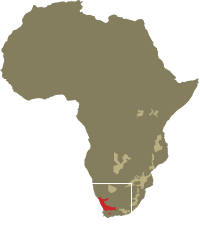
From the vast plains of the Nama Karoo to the Succulent Karoo and rugged West Coast, the Drylands span South Africa’s arid western interior and coastline
DRYLANDS
LOST FOR
EIGHTY-SIX YEARS.
THEN REDISCOVERED
BY THE EWT
For more than 80 years, De Winton’s Golden Mole had not been recorded
anywhere. Hidden beneath the dunes of South Africa’s west coast, this elusive
mammal was feared extinct.
In 2023, we led the team that rediscovered the species using environmental DNA
(eDNA) technology and a specially trained scent-detection dog. After searching
kilometres of remote coastline, one of South Africa’s most mysterious mammals
returned to the scientific record.
The rediscovery captured global attention and reminded us that the Drylands
hold countless secrets. It also demonstrated how science, innovation, and
persistence can transform our understanding of the natural world and strengthen
conservation for species that have remained hidden for decades.
DRYLANDS
WHY THE
DRYLANDS MATTER
Where life thrives against the odds
The Drylands stretch across the Succulent Karoo, parts of the Nama Karoo, and
South Africa’s West Coast, forming one of the country’s most distinctive
ecological regions. Shaped by limited rainfall, extreme temperatures, and vast
open spaces, they support people, wildlife, and plants that have adapted to
survive where water is scarce.
Despite their harsh appearance, these landscapes are home to extraordinary
natural wealth. They support some of the world’s greatest concentrations of
succulent plants, alongside species found nowhere else on Earth. The region is
home to various endemic rare and Endangered species such as Riverine Rabbits,
De Winton’s Golden Mole, Dwarf Tortoises, reptiles and birds of prey, each
uniquely adapted to survive in this challenging environment.
As the climate changes, the Drylands are becoming increasingly important.
Protecting these landscapes helps conserve unique wildlife, strengthen climate
resilience, and support the communities whose livelihoods have long depended
on living with uncertainty and scarcity.

Species we protect
Birds of
Prey
Riverine
Rabbit
Dwarf and Tent
Tortoises
Golden
Moles
Succulent
Flora
Freshwater
Fish
Invertebrates
DRYLANDS
CONSERVATION
IN ACTION
Protecting this landscape means understanding how wildlife, ecosystems, and communities adapt to life with limited water. We combine science, stewardship, awareness and long-term partnerships to build resilience across one of South Africa’s most remarkable landscapes.
Discovering and protecting unique
species
Good conservation starts with good science. Through BioBlitz expeditions, biodiversity surveys, environmental DNA (eDNA), camera traps and other emerging technologies, we uncover new species, map their distributions and identify conservation priorities across the Drylands. This knowledge guides every decision we make, from protecting threatened habitats to planning long-term conservation action.
Protecting habitats and strengthening
stewardship
Many of the Drylands’ most threatened species survive on land used for farming and other purposes. We work with landowners and conservation partners to protect important habitats, improve how they are managed and strengthen stewardship across the landscape.
Supporting communities and
sustainable land management
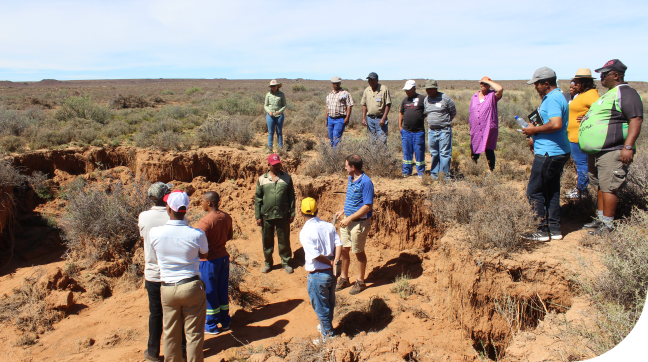
Communities have lived and worked in the Drylands for generations. Through initiatives such as the Karoo Forever Project, we work alongside local people to build skills, strengthen conservation-based livelihoods and put sustainable land management into practice.
Building resilience
for a changing climate
The Drylands are particularly vulnerable to rising temperatures, prolonged drought and land degradation. We restore degraded land and natural systems to improve soil and water retention, strengthen resilience to drought and help wildlife and people withstand increasingly extreme conditions.